
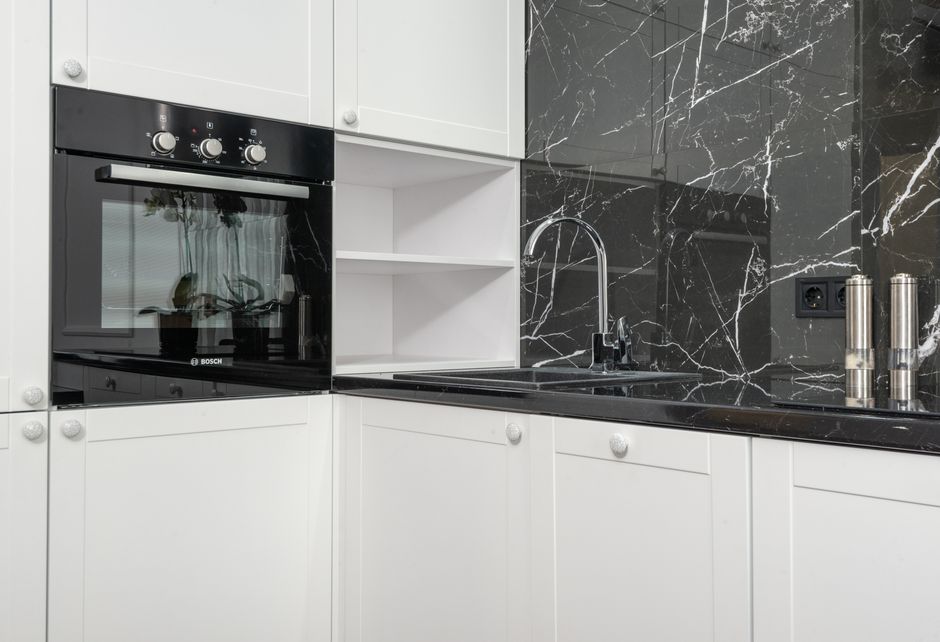
Nobody books an oven clean because they love the smell of degreaser. They book one because reunion dinner is at their place in five days and the oven hasn’t seen a scrub since last Chinese New Year, or because the agent doing the handover inspection on Thursday has “oven - clean condition” typed into the inventory list in bold. The trigger is always something else. Your job is to be the business that shows up in the ten minutes after that trigger fires.
Here’s the part that actually costs you jobs: the enquiry rarely stays where it started. Someone sees your Google Business Profile at 9.40pm, taps the green WhatsApp icon, and the conversation disappears into your personal phone. Someone else clicks a boosted Facebook post, messages you directly, and by the time you quote them a price the ad account has no idea whether that chat turned into a $120 job or a no-reply. You can be running Google Ads, posting on Instagram, and sitting top of the map pack for “oven cleaning Singapore”, and still not be able to tell your partner, your part-timer, or yourself which of those is actually filling the diary. More spend doesn’t fix that. A nicer website doesn’t fix it either. The hole is in the handoff, not the channel.
The fix isn’t complicated, but it does take a bit of discipline most small operators never get round to building: give every channel its own tagged way into WhatsApp, and log where each booked job actually started. Do that for one busy season and you’ll know, for the first time, whether your ad budget is buying jobs or buying price-checks from across the island.
The gap between the Google click and the WhatsApp thread that actually books the job
Walk through a normal enquiry. A tenant’s lease is ending in three weeks and the landlord wants the oven spotless for the handover photos. She searches “oven cleaning near me”, lands on your Google Business Profile, and taps the WhatsApp button instead of calling. From that second onward, every signal you had about where she came from is gone. Google Ads logs a click, maybe a call if you’ve got call tracking, but the conversation that actually produces a $110 job happens on a platform that doesn’t report back to any ad dashboard you own.
Multiply that by every enquiry route you run. Your GBP listing, a Facebook boosted post, an Instagram bio link, a referral from a condo cleaner you partner with, a repeat customer who just saved your number from two years ago. Every single one of those can end in the exact same WhatsApp thread, with the exact same green tick and the exact same “hi, how much to clean one oven” opener. Once they’re all sitting in one inbox, they look identical. You can’t tell a hot lead that’s ready to book from a cold one still comparing three quotes, and you definitely can’t tell which marketing channel paid for the hot one.
This is where most oven cleaning operators quietly give up on tracking altogether and fall back on gut feel: “Facebook feels like it’s working” or “I think most of my jobs come from Google now.” Gut feel is fine when you’re running one channel on a shoestring. It falls apart the moment you’re spending real money on ads, because you end up renewing the channel that feels busiest, not the one that’s actually converting into paid work. A channel can generate plenty of WhatsApp chatter and almost no bookings, and if you’re not tagging the source at the point of first contact, you’ll never catch it.
There’s a second, quieter cost here too. Singapore enquiries cluster hard around specific weeks: the fortnight before Chinese New Year, the run-up to Hari Raya and Deepavali, and the handover season when leases turn over at the end of the year and again mid-year. If your tracking only kicks in when you glance at the Google Ads dashboard, you’ll miss the fact that half your December bookings actually came from a WhatsApp Status update you posted, not the ad you were watching.
A tracking chain built around click-to-chat, not forms
The honest starting point is this: you’re not going to get homeowners filling out a contact form before they book an oven clean. It’s a low-ticket, trust-driven, same-week decision, and WhatsApp is how people in Singapore actually want to talk to a tradesperson. So the tracking system has to be built around click-to-chat, with the tagging done before the message ever lands in your inbox, not after.
Set this up once and it keeps paying off through every CNY and handover season after:
- 1Create a separate wa.me click-to-chat link for every channel, with a different prefilled message baked into each one. The GBP link opens with "Hi, saw you on Google, looking for an oven clean" and the Facebook bio link opens with "Hi, saw your Facebook ad." The customer doesn't have to type a thing; the tag arrives with them.
- 2Keep a simple running log, a spreadsheet is fine, where every new chat gets one line: date, source (from the prefilled text), job type (single oven, range hood, full kitchen, handover clean), quoted price, and outcome (booked, ghosted, price-shopped elsewhere).
- 3Add a GA4 event on your website for every tap of the WhatsApp button, separate from the "call now" button. If two-thirds of your mobile visitors tap WhatsApp and almost nobody calls, that tells you exactly which contact method to put first on the page.
- 4Run a dedicated tracking number for phone enquiries that lands separately from WhatsApp, so a caller who later switches to WhatsApp to confirm the appointment still gets counted once, correctly.
- 5Once a job is actually completed and paid, upload that as an offline conversion back into Google Ads and Meta, not just the initial click or message. Platforms optimise toward whatever you tell them counts as a conversion. If you only ever feed them "message received," they'll keep sending you more chatty price-checkers.
- 6Reconcile weekly during peak season, more loosely outside it: pull the log, total bookings by source, and compare that against what each channel actually cost you that week. This is the number that should decide next month's ad budget, not which post got the most likes.
- 7Note the price quoted and whether GST applied if you're GST-registered, since a job quoted at $120 nett reads very differently in your margin math than one quoted at $120 before tax. Mixing the two in your log quietly distorts which channel looks most profitable.
None of this needs a CRM built for a call centre. It needs consistency, mostly from whoever answers the WhatsApp first, usually the owner. If your website sends people to WhatsApp but a fair chunk never actually send the message, that’s not a tracking problem, it’s a page problem: a slow-loading mobile page, a WhatsApp button buried below the fold, or no visible price range to set expectations before someone bothers typing. HeyLead Insights is useful here because it shows you exactly where someone scrolled, paused, and left without tapping through, rather than you guessing from the GA4 numbers alone.
Free tools worth running before you touch a tracking spreadsheet
If you’re running paid search alongside this, it’s worth knowing the benchmark you’re being measured against: aggregated 2026 industry figures put average Google Ads ROAS around 4.2x, with Meta averaging closer to 2.8x. For an oven cleaning business where a single job sits somewhere in the ballpark of $90 to $150, that gap matters less than whether your tracking can even tell you which jobs the ad paid for in the first place. A tidy ROAS number calculated from the wrong conversion events is still the wrong number.
If you want to see the full intake and the handoff into bookings in one place rather than stitching spreadsheets together every Sunday night, HeyLead’s analytics work is built around exactly this kind of multi-channel, WhatsApp-heavy funnel.
Get a free marketing audit. We review your search, ads, and landing pages and send back what to fix first.
Get a free audit
What changed for a two-crew operator once the CNY rush got tagged
Picture a two-crew oven cleaning operation running both a Google Business Profile listing and a weekly Facebook boosted post in the six weeks before Chinese New Year. Before any tagging was in place, the owner’s instinct said the Facebook posts were driving most of the CNY rush, because the inbox filled up every time a post went live. He kept topping up the boost budget and left the GBP listing alone, figuring it ran itself.
Once the wa.me links were tagged by source, the picture flipped. Most of the messages that turned into actual bookings were landing from the Google Business Profile, usually around 9pm, after the kids were in bed and the host of reunion dinner finally had ten quiet minutes to sort out the oven. The Facebook boosted posts were generating plenty of messages, but a large share of them were from people well outside his service radius, asking the price out of curiosity rather than booking intent. The inbox felt identically busy either way. The booking rate was nowhere near the same.
The fix wasn’t dramatic. He narrowed the Facebook radius, swapped the boosted post’s generic kitchen photo for a close-up of a genuinely filthy oven interior next to the finished result, and put the saved budget into better photos on the Google Business Profile instead, since that was where the real demand was already showing up. The mechanism that mattered wasn’t a clever new channel. It was finally being able to see that two channels producing the same volume of chat were producing wildly different numbers of booked jobs, and only one of them deserved more money.
The same pattern shows up around handover season, when leases turn over and tenants need the oven spotless before the agent’s final inspection. Those enquiries tend to come in waves tied to lease end dates rather than evenly across the month, and they’re worth tagging separately from the CNY rush. A job sourced from a property agent referral behaves completely differently from one sourced through a search ad, in both urgency and price sensitivity, and lumping them into one “bookings” number hides that difference.
What oven cleaning crews say once the WhatsApp trail stops being a black box
“I used to think the ad was working because my phone kept buzzing. Took me a season to realise half those messages were from people two MRT stops outside where I’d even travel.”
“The thing that changed wasn’t the ads at all, it was finally seeing which WhatsApp chats actually turned into a confirmed time slot instead of just another ‘can you do cheaper’.”
FAQ
Do I need a CRM to track WhatsApp leads for an oven cleaning business? Not at the start. A shared spreadsheet with source, job type, and outcome per chat gets you most of the value. A CRM starts to earn its keep once you’ve got two or more people answering enquiries and need the log to update itself rather than relying on memory at the end of a long day.
How do I tag a WhatsApp link without any coding? Use the standard wa.me URL format with a different prefilled message in the text parameter for each channel. Put that link in your Google Business Profile, your website button, and your Facebook bio separately. When the customer taps through, the prefilled text does the tagging for you, no app or integration required.
Most of my jobs still come from phone calls, not WhatsApp. Does this still apply? Yes, just swap the mechanism. Use a dedicated tracking number for each channel instead of a tagged link, and log the source the same way. The principle doesn’t change: tag at first contact, log at outcome, reconcile by channel.
Can I justify running Google Ads if I’m only taking on a handful of jobs a week? Usually yes, but keep the budget tight to your actual service radius and watch the cost per booked job, not cost per message. A small oven cleaning operation doesn’t need volume, it needs the right dozen jobs a week, and that’s a targeting and tracking problem more than a budget one.
Does GST registration change how I should track quoted jobs? It changes your margin math, not your tracking method. If you’re GST-registered, note whether a logged price is GST-inclusive so you’re comparing like for like across channels when you work out which one is actually most profitable, not just which one books the most jobs.
Putting it to work
Start this week by pulling your last month of WhatsApp enquiries and sorting them, even roughly, by where you think each one came from: GBP, a boosted post, a referral, a repeat customer. It’ll take an evening. You’re looking for the gap between how busy a channel felt and how many of those chats actually became a paid job. That gap is usually bigger than owners expect, and it’s the clearest signal you’ll get for where to put next month’s ad spend.
The handoff between a click and a booked oven clean is exactly the kind of tracking work that’s easy to start and hard to keep consistent through a busy CNY or handover season. HeyLead builds and runs that tagging, reconciliation, and reporting as an ongoing program, so every WhatsApp chat, call, and ad click rolls up into one clear answer: which channel is actually filling your diary. Chat with us on WhatsApp.
Free marketing audit, or reach Martin directly:
Get a free audit Connect on WhatsApp · [email protected]