
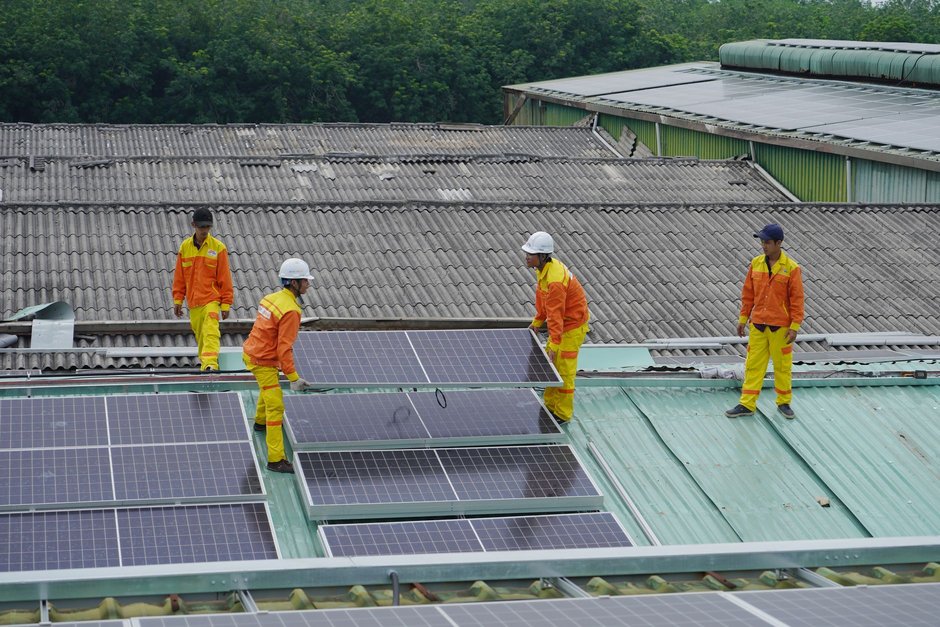
Most solar installer websites in Singapore rank for almost nothing a landed homeowner actually types into Google. The people searching for solar panels landed house singapore are not looking for a page about climate change or renewable energy trends. They want to know four things. Will it pay back? Will my roof work? Does my single phase supply matter? How long will SP Group take?
If your site answers those questions on pages built around terrace, semi-detached and bungalow roofs, and each page ends with an easy way to book a roof survey, you stop competing on generic “go green” content. You start showing up for the searches that come right before someone picks up the phone or sends a WhatsApp message.
This guide walks through how we set that up, in the order you would actually do it.
What landed homeowners type before they contact an installer
Start by forgetting your own vocabulary. You think in kWp, inverter brands and string layouts. Your buyer thinks in their house.
Here are the kinds of searches that matter for a landed home solar business in Singapore:
- “solar panels for terrace house worth it”
- “semi detached solar payback”
- “can I install solar on a bungalow with a pitched roof”
- “single phase vs three phase solar”
- “how long SP Group approval solar”
- “solar panel cost landed home”
- “solar installer Singapore” plus an estate name, like Serangoon Gardens, Siglap or Upper Thomson
Notice what these have in common. Each one is a homeowner with a specific roof, a specific electrical supply and a specific worry about money or time. Not one of them is asking about the future of renewable energy in Southeast Asia.
Now look at your blog. If most of it reads like a school project on sustainability, that content is not pulling in buyers. It might bring in students and other installers. It rarely brings in someone ready to book a roof survey.
Sort the questions into four buckets
Group what you hear on every site visit and every WhatsApp chat into four buckets:
- Payback and cost - how much, how long until it pays for itself, how excess power is credited
- Roof suitability - roof type, shading from neighbors, orientation, structure, space for panels
- Electrical supply - single phase or three phase, meter and switchboard questions
- Approvals and timing - SP Group connection, how long from survey to switching on
Every page you build should answer at least one bucket properly, in plain language, for one roof type.
Mapping “solar panels landed house Singapore” searches to roof pages
The biggest structural fix is to stop having one “Residential Solar” page that tries to talk to everyone. A terrace owner and a bungalow owner have different roofs, different shading problems and different budgets. Give each one a page.
Terrace and corner terrace page
Terrace owners usually worry about limited roof space and whether the neighbor’s extension or water tank shades their panels. Corner terrace owners often have a bit more roof and a different shading picture. Cover both on one page, or split them if you get plenty of corner terrace inquiries.
Talk about how you assess usable roof area on a narrow plot, what happens with a party wall, and what a realistic system looks like for a home that size. Show photos of your own terrace jobs if you have them.
Semi-detached page
Semi-d owners sit in the middle. They often have more roof than a terrace, and they share one side with a neighbor. Explain how you plan around the shared side, how you handle mixed roof sections, and how the system can grow if they later add a battery or an EV charger.
Bungalow and detached page
Bungalow owners tend to have more roof, more complex shapes and higher electricity use. They also tend to ask harder questions and expect a more detailed survey. This page should explain how you handle multiple roof faces, pitched versus flat sections, and why a proper roof survey matters more on a bigger, more complex house.
Support pages that feed the roof pages
Next to the three roof pages, build a small set of question pages:
- Single phase vs three phase solar for landed homes
- Solar panel cost for a landed home, explaining what moves the price up or down
- SP Group connection and approval, explaining the steps in order
- Payback, explaining what affects it for a typical household
Each support page links back to the right roof pages, and each roof page links to the support pages. That internal linking tells Google which pages are the main ones. It also helps a homeowner who lands on “single phase vs three phase” find their way to the semi-d page and then to the booking form.
The four questions every page must answer honestly
This is where most installer sites lose the homeowner. They dodge the hard questions because they are afraid of putting numbers in writing. You do not have to publish a price list. You do have to explain how the answer works.
Payback
Do not promise a payback period you cannot stand behind. Instead, explain what drives it: how much electricity the household uses during the day, how much roof faces the sun, how much shading there is, and how exported power is credited on their bill. Then say plainly that the roof survey is where you work out their actual figure.
That is honest, and it gives the reader a reason to book.
Roof suitability
Write down the things that make a roof a good fit or a poor fit. Mention shading from trees, neighboring houses and water tanks. Cover the roof’s condition, the material and whether the structure can carry the load. Say what you check during a survey and what happens if the roof needs work first. A homeowner who reads this feels like they already understand the visit.
Single phase vs three phase solar
Many landed homes in Singapore run on single phase supply, and homeowners are often unsure what that means for solar. This page should explain in plain terms what single phase and three phase supply are and how to check which one they have. It should also say how the supply type can affect system size and inverter choice, and when an upgrade might come up.
Stick to what you know from your own jobs. If an upgrade involves SP Group, say that you handle or guide that process, without guessing at timelines you cannot control.
SP Group approval and timing
Lay out the sequence: roof survey, proposal, design, applications, installation, connection and switching on. Tell them which steps you handle and which ones depend on SP Group. Be honest that some stages are outside your control. People trust an installer who explains the wait more than one who promises speed.
Solar panel cost for a landed home
Explain what goes into the price: panel count, inverter type, mounting on pitched versus flat roof, any electrical work, and optional extras like batteries. Then point to the survey as the way to get a firm quote. You can say a terrace system is usually smaller than a bungalow system without putting a figure on either.
Turning a page visit into a booked roof survey
Ranking is only half the job. A homeowner who reads your semi-d page and then has to hunt for a contact form is a lost lead.
In Singapore, most homeowners would rather send a WhatsApp message than fill in a long form or call. Build your pages around that.
Here is the setup we recommend, step by step:
- Put a “Book a roof survey” button near the top of every roof page, not just at the bottom. Have it open WhatsApp with a pre-filled message that mentions the roof type, like “Hi, I’d like a roof survey for my semi-detached house.”
- Offer a short form as the second option for people who prefer it. Ask for name, mobile number, postal code, house type and whether they know their phase supply. Nothing more.
- Ask for two photos: the roof (or a view of it from the street) and the electrical meter or switchboard. This lets you qualify the lead before you visit and shows the homeowner you take the survey seriously.
- Add a short “What happens at your roof survey” block to every roof page: who comes, how long it takes, what you check, and what they receive afterward.
- Add FAQ markup to the questions on each page so Google can read them clearly. Our free FAQ schema generator builds the code for you to paste in.
- Track every WhatsApp click and form submission as a conversion so you can see which roof page books the most surveys. Without this, you are guessing which pages to improve.
- Follow up within the same day. A homeowner comparing installers will often book with whoever replies first.
If your current pages are slow, cluttered or hide the booking button, it is worth fixing them before you write more content. Our guide to high-converting landing pages covers the layout side in more detail.
Showing up as a solar installer Singapore homeowners find nearby
Landed estates are clustered. Homeowners in Bukit Timah, Serangoon Gardens, Siglap or Sembawang Hills talk to their neighbors, and they often search with an area name in mind.
Google Business Profile
Your Google Business Profile should list solar installation as your main category, describe the landed home types you work on, and show real photos of terrace, semi-d and bungalow installations. Ask every happy customer for a review, and ask them to mention their house type and area in their own words. A review that says “they installed panels on our corner terrace in Upper Thomson” helps you far more than “great service.”
Run through our free local SEO checklist to catch the gaps in your profile and listings.
Project pages by estate
Once you have a few jobs in the same area, write a short project page for each one. Cover the house type, the roof challenge, how you solved the shading or phase question, and a photo of the finished roof. Leave out the homeowner’s address. Use the estate name and house type. These pages pick up local searches and also show the next homeowner that you have solved their exact problem before.
AI answers
More homeowners now ask ChatGPT or Google’s AI answers questions like “is solar worth it for a terrace house in Singapore.” Those tools tend to pull from pages that answer a question directly and clearly. That is one more reason to write a plain answer at the top of each support page, then the detail below it.
If you want us to build out the roof pages, support pages and tracking for you, that is exactly what our SEO for solar installers service is set up to do.
Frequently asked questions
Should I write separate pages for terrace, semi-detached and bungalow roofs, or is one landed homes page enough?
Separate pages work better. Each house type comes with different roof space, shading and budget questions. When a page speaks to one type, the homeowner feels it was written for them and is more likely to book. One general page tends to rank weakly for all three.
Can I talk about payback without giving a figure I might not be able to stand behind?
Yes. Explain what drives payback, such as daytime electricity use, roof orientation, shading and how exported power is credited on the bill. Then say the roof survey is where you calculate their figure. Homeowners trust this more than a headline number.
How much detail should my single phase vs three phase page go into?
Enough for a homeowner to check their own supply and understand why it matters for their system. Explain the difference in plain words, what it can change about the inverter and system size, and that you will confirm it on site. Leave out technical detail they cannot act on.
What should I say about SP Group approval times if I cannot control them?
Lay out the steps in order and say clearly which ones you handle and which depend on SP Group. Do not promise a timeline. Being upfront about the wait builds trust and cuts down on angry follow-up messages later.
Is it worth asking homeowners to send roof and meter photos before the survey?
Usually, yes. It filters out roofs that clearly will not work, lets you come to the survey prepared, and shows the homeowner you are thorough. Make it optional so it does not scare off people who just want to chat first.
Will my old green-energy blog posts hurt my rankings?
They are unlikely to hurt, but they rarely help bring in buyers. Keep any that get real traffic. Link them to your roof pages, and spend your writing time on the landed home questions instead.
Your next step
This week, open your site and check whether a semi-detached homeowner could find a page about their roof, read a straight answer on single phase supply, and book a roof survey on WhatsApp in under a minute. If they could not, write down which of those three is missing and fix that one first.
If you would rather have us map your pages and set up the tracking, Chat with us on WhatsApp and we will take a look at your site with you.