

Monday morning in Jurong: a facilities coordinator for a mid-size office tower opens three WhatsApp threads, two PDFs of aircon duct photos, and a sticky note that just says “IAQ complaint - Level 12.” They are not browsing for “best aircon tips.” They need a duct cleaning crew that can show NEA-aware process, insurance, and a clear before-after method - and they need it without calling five vendors who never answer.
That is the real search market for duct cleaning in Singapore. Residential HDB and condo owners search when dust, smell, or a recent renovation makes the vents feel wrong. Landed homes and FM buyers search when a building audit, tenancy handover, or staff complaint forces a decision. High-intent organic search is where those buyers shortlist who gets the site visit. Rank for the wrong phrases and you collect brochure readers. Rank for the right ones and your diary fills with surveys that turn into truck days.
This is a practical how-to for owners and marketing leads who want organic search to mean real booking enquiries, not vanity traffic. You will map intent, fix entity and local SEO, build pages that convert, prove trust with reviews and proof assets, measure what actually books, and keep publishing without hiring a full-time content team.
What Singapore duct buyers type when the problem is already urgent
High-intent queries in this niche rarely sound like brand slogans. They sound like jobs. Think “aircon duct cleaning HDB,” “office AC duct cleaning Singapore,” “kitchen exhaust duct cleaning restaurant,” “mouldy aircon vents condo,” “duct cleaning near Tampines,” and “central aircon duct clean price.” The buyer already accepts that a crew must enter the unit or plant room. Your SEO job is to meet that moment with a page that matches the building type, the urgency, and the proof they need to message you on WhatsApp or call.
Separate three intent clusters before you write a single blog post. Cluster one is residential remedial: HDB flats, condos, and landed homes after renovation dust, odour, or allergy complaints. Cluster two is commercial and F&B: restaurants, cafes, offices, and malls where extract ducts and shared AHUs paths create compliance and smell pressure. Cluster three is FM and multi-site: property managers comparing method statements, insurance, night work, and response windows across Central, East, West, North, and North-East portfolios.
Each cluster needs different proof on the SERP. Residential buyers scan photos of filthy returns, clear pricing cues or “from” ranges in SGD, and same-week availability language. Commercial buyers scan method, containment, after-hours capability, and whether you have done similar square footage. FM buyers scan coverage area, SLA tone, and whether your Google Business Profile and site look like a real operating company rather than a thin brochure.
Ignore zero-click reality at your peril. A large share of searches end without a click, and AI-style summaries pull short answers from whoever structured facts cleanly. That does not kill SEO for duct cleaning. It raises the bar: your entity (NAP consistency, GBP categories, service areas, FAQ schema) has to be crisp so you still earn the click when someone wants a quote, and you still get cited when someone asks an assistant-style question about how duct cleaning works in Singapore buildings.
Also be honest about paid versus organic. Search CPCs keep climbing industry-wide, and wasted SEM spend of 20-30% on bad queries is common when landing pages are generic. Organic that ranks for high-intent phrases protects margin on the jobs where WhatsApp enquiries already convert if you reply fast. Use paid later to fill gaps. Do not treat Ads as a substitute for pages that should rank.
Why duct cleaning sites rank for the wrong Singapore searches
Most failure modes are boring and fixable. The homepage targets “duct cleaning Singapore” once, then buries residential and commercial under the same paragraph. Blog posts chase “how often should you clean aircon ducts” with no local building context, no CTA to a survey booking, and no internal links to service pages. Google Business Profile lists the wrong primary category, skips service areas like Woodlands or Punggol, and shows photos of smiling staff instead of dirty ducts and clean coils.
Another leak: the company ranks for informational queries, traffic rises, and the van diary stays thin. Sessions hit a slow mobile page (Google’s own CrUX data consistently shows fewer than half of origins pass all three Core Web Vitals on mobile - trade and home-services sites are among the worst performers, so many trade sites still fail INP or LCP on phone). The form asks for too many fields. There is no PayNow deposit path mentioned for residential, no WhatsApp deep link, and no “same-day survey for Central” language. The lead cools while the owner is on a job in the East.
Entity confusion hurts harder than thin content. One legal name on ACRA, another on the site header, a third on GBP, and a fourth on directories. Service pages never name building types Singaporeans actually live and work in. Competitors who publish clear HDB versus condo versus commercial pages, plus consistent NAP, win the map pack and the “near me” modifiers even with fewer total backlinks.
Content cadence collapses after the first burst. Someone writes six posts in a month, then silence for half a year. In 2026, a high share of top-ranking pages include AI-assisted drafting, but pages that win still need human specifics: real job photos, local process notes, and unique method details. Generic AI filler without on-site proof does not move booked jobs. Information gain beats word count.
If your stack is already messy, a focused SEO partner can own technical fixes, local entities, and conversion-minded page builds so your ops team stays on the tools. Treat that as optional support, not a prerequisite for starting the checklist below.
Get a free marketing audit - we review your search, ads, and landing pages and send back what to fix first.
Get a free audit
The Singapore duct cleaning SEO playbook: intent, entities, pages, proof
Work this as a sequence you can run over 7-14 days for the foundation, then keep improving. Do not rearrange campaigns daily. Ship durable assets.
Audit scorecard
-
Intent map in one spreadsheet
List 40-60 phrases split into residential HDB/condo/landed, commercial/F&B extract, office AHU/duct, and FM multi-site. Tag each as survey-ready, price-research, or education. Only survey-ready and strong commercial phrases get primary landing pages. Education supports those pages with internal links, not orphan blogs.
-
One URL per building job type
Create or rebuild dedicated pages: HDB aircon duct cleaning, condo central duct cleaning, landed home duct cleaning, restaurant kitchen exhaust duct cleaning, office duct cleaning Singapore, and multi-site FM duct hygiene. Each page needs a unique H1, first 100 words that name the building reality, proof blocks, and a single primary CTA (WhatsApp or call).
-
Entity and GBP hygiene
GBP hygiene Align legal name, phone, WhatsApp number, and address everywhere. Set categories that match duct and aircon-related services. Add service areas for the towns you truly cover. Upload job photos weekly: open ducts, contaminated liners, cleaned supply boots, not stock smiles. Post GBP updates when you finish a notable commercial job (no client confidential data).
-
On-page that answers the quote objection
Above the fold: who you clean for, typical access (false ceiling, AHU room, kitchen hood), what is included, and response window. Mid-page: step method, containment notes, safety, GST-aware pricing language if you publish ranges, and FAQs Singapore buyers ask (how long for 4-room HDB, night work for F&B, insurance). End with review snippets and a short enquiry form plus WhatsApp.
-
Technical floor for mobile enquiries
Compress hero images of ducts without killing detail. Fix tap targets on call buttons. Check LCP and INP on a mid-range Android. Validate title tags, meta descriptions, H1 uniqueness, canonicals, robots, and sitemap. Add FAQ schema only where FAQs are visible on-page.
-
Proof system, not random testimonials
Collect reviews that name building type and outcome. Keep a photo library tagged by HDB, condo, restaurant, office. Publish 1-2 short case blurbs per quarter with specific operational notes (for example, night clean for a 90-seat kitchen in the East, three AHU zones, two-night window). Proof converts high-intent traffic; adjectives do not.
-
Measurement tied to booked surveys
Track calls, WhatsApp clicks, and form submits as conversions in GA4 via GTM. UTM your GBP links and offline follow-ups where practical. Weekly, mark which enquiries became site surveys and which became jobs. Rankings without survey rate are a vanity loop.
-
Publishing cadence with human specifics
Ship two useful pieces a month that feed money pages: “what an HDB duct clean includes,” “restaurant extract duct cleaning checklist,” “how condos schedule central duct work without lift drama.” Use AI for outlines if you want, then force local detail and unique photos. For sustained niche and region output without a giant writing bench, HeyLead Auto Blogger can run managed, niche-aware article cadence under human strategy so HDB, F&B, and FM themes keep landing while your crew stays on-site.
DIY playbook steps
Action checklist
- Console queries for 90 days. Highlight any phrase with impressions that includes HDB, condo, office, restaurant, exhaust, or a town name. Those are your first page targets.
- Rewrite the top three money pages so the first screen answers building type, access, and next step. Remove generic “we are passionate about clean air” openers.
- Add internal links from every educational URL to the matching money page with descriptive anchors (“office duct cleaning in Singapore,” not “click here”).
- WhatsApp link, and six fresh job photos.
- Web Vitals and on-page checks, then ship one speed fix (usually image weight or third-party scripts on the enquiry template).
- Instrument WhatsApp and call clicks. Compare last 30 days’ organic enquiries to booked surveys. If survey rate is weak, fix proof and response speed before chasing more keywords.
- Schedule four articles that each answer one objection and link to one money page. Keep a simple editorial calendar; do not wait for perfect brand videos.
- Review rankings and enquiry quality every two weeks, not every morning. Change pages in batches so you can tell what worked.
Free tools - try these yourself
Landing pages still decide whether a rank becomes a job. If organic visitors bounce on thin proof, use session evidence to see where they stall. HeyLead Insights helps you spot scroll drop-offs before the method section, rage taps on non-clickable phone text, and form fields people abandon on mobile - so you fix the handoff instead of guessing.
When you want niche-specific positioning beyond DIY, skim HeyLead’s Duct Cleaning marketing page for how channel work ties to booked cleans rather than generic lead volume.
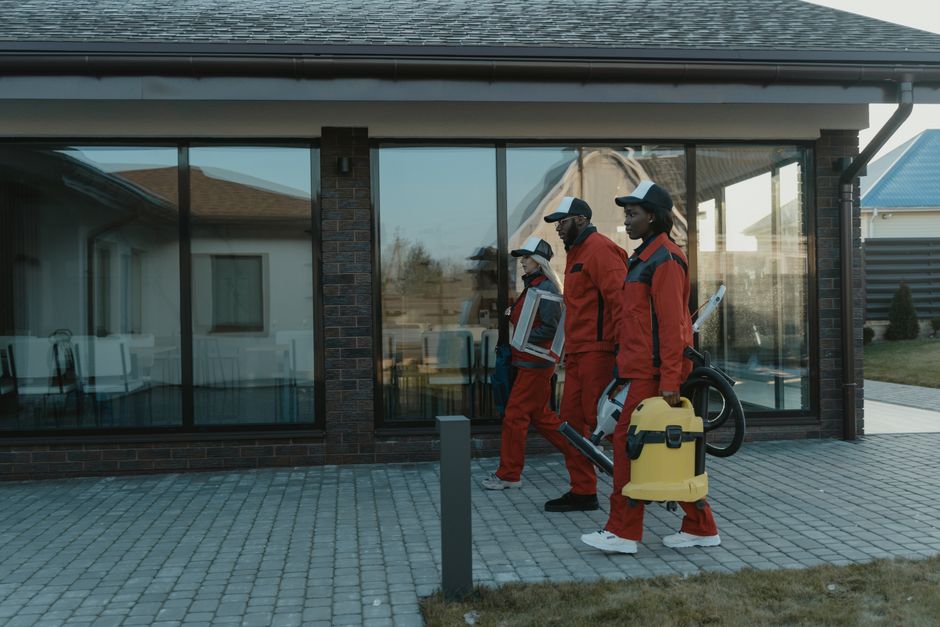
Two Singapore booking paths: HDB remedial vs F&B extract nights
Path A - residential remedial in a mature estate. A marketing lead for a small duct team notices Search Console impressions for “aircon duct cleaning HDB” and “dusty vents condo” but the site only has a generic services blurb. They build a dedicated HDB page with photos from a 4-room clean, a plain-language scope (supply and return, accessible runs, what is excluded), and a WhatsApp button pre-filled with estate and unit type. They add FAQ schema for timing and whether residents must be home. Organic enquiries do not explode overnight, but survey bookings from that URL climb because the page matches the query and the reply script asks three qualifying questions in the first message: estate, aircon type, and preferred window. The mechanism is match-plus-speed, not a miracle backlink.
Path B - restaurant extract in a busy East-side unit. The owner kept ranking for broad “duct cleaning” terms while F&B buyers bounced. They publish a kitchen exhaust page that leads with night work, grease handling, and how long a typical 80-120 seat line needs. GBP posts show before-after hood and duct sections (faces blurred, no brand theft issues). They interlink from a short article on greasy smell complaints after closing. The first serious lead is a manager who found them on mobile at 11 p.m., read the night-work paragraph, and booked a survey for the following week. Paid search was not involved. The page removed the “will these guys work after we close?” objection that generic home-service copy never answers.
In both paths, response discipline matters as much as rankings. High-intent SG buyers often multi-message two or three vendors. A 12-minute WhatsApp reply with a clear next step beats a perfect meta description. Train whoever holds the phone after hours, even if that is you with a template.
Client result
Tracking enquiry-to-survey rate, not just rankings, is what separates programmes that fill vans from ones that fill dashboards. One multi-location cleaning CEO described the difference after switching approach:
“We’d worked with HeyLead before and knew what they were capable of - so when performance with another agency didn’t meet expectations, coming back was an easy decision. The difference was immediate. They rebuilt our entire Google Ads account from scratch, fixed our tracking so we finally had accurate data, and gave us the confidence to scale our spend. What impressed us most was how well they understood our franchise expansion goals - they didn’t just manage campaigns, they built a system that supports every new location we open. The leads are consistent, the quality is there, and the relationship is one we genuinely trust.” - CEO, multi-location cleaning services

FAQs
How long before duct cleaning SEO in Singapore shows booked surveys?
In Singapore’s duct cleaning niche, map-pack positions for town-modifier phrases (e.g., “duct cleaning Tampines”) often move within 6-10 weeks once GBP categories and service areas are corrected - because competition at that granularity is thin. Broader category terms like “office duct cleaning Singapore” sit in a more competitive bracket and typically take 4-6 months of consistent page and link work. Anyone promising full category dominance in a week is selling hope, not a programme.
Should we blog weekly or fix service pages first?
Fix service pages and GBP first. Blogs without money-page targets leak equity. Once HDB, condo, office, and F&B pages convert, publish supporting articles that earn internal links and answer objections.
Do we still need Google Ads if organic is the goal?
Ads can cover gaps and branded defence, but they will not fix a slow page or missing proof. Clean organic high-intent coverage usually lowers your dependence on rising CPCs for the same job types.
What is a sensible content volume for a small duct team?
Two strong pieces a month plus steady GBP photos beats twelve thin AI posts. Prioritise information gain: local process, building types, and real jobs. Managed cadence tools help only when a human still inserts those specifics.
Which metrics prove SEO is working for duct cleaning?
Track organic enquiries, survey bookings, jobs won, and revenue by building type - not only rankings or sessions. Pair Search Console queries with a simple CRM or spreadsheet outcome column.
Putting it to work
This week
-
Pull 90 days of Search Console queries and highlight every HDB, condo, restaurant, office, and town modifier.
-
Rewrite one money page (start with your highest-impression job type) so the first screen matches that buyer.
-
Align GBP name, categories, areas, WhatsApp link, and six real job photos.
-
Run the Core Web Vitals checker and local SEO checklist on your top URLs; fix the worst mobile issue.
-
Turn on WhatsApp and call click tracking; reply templates ready for after-hours.
Next 30 days
- Ship the remaining building-type pages and interlink them from old blogs.
Free marketing audit, or reach Martin directly:
Get a free audit Chat with us on WhatsApp · [email protected]