

Turn off the keyword with the worst numbers in your Google Ads account, and there’s a decent chance you just killed the ad that was quietly filling next week’s roster. It didn’t convert on your website. It never showed up as a lead, a call, or a form fill. It converted on WhatsApp, in a chat your account has no idea ever happened.
That gap costs more than a bruised ad budget. A crew sits half-booked on a Tuesday when it could be on a Tuas warehouse roof. A quote that should have gone out within the hour sits unread because nobody flagged it as urgent. Across digital advertising generally, agencies and in-house teams now report losing a meaningful chunk of conversion data to ad blockers, browser privacy changes, and platforms that simply can’t see what happens off their own site. In Singapore, where the actual close often happens inside a messaging app rather than on a landing page, that blind spot is bigger than most owners realise. You end up optimising a Google Ads account against numbers that were never true in the first place.
Here’s the part worth sitting with: the fix isn’t a bigger budget or a flashier ad. It’s building the account, the landing page, and the tracking around the way Singapore buyers actually enquire, so the data you’re staring at on a Thursday morning reflects the jobs you’re actually winning, not the ones your tracking happened to notice.
The click comes from a facility manager, not a homeowner with dusty panels
Most Google Ads accounts for solar panel cleaning are built as if the customer is a homeowner who glanced at a dirty roof and typed a search. In Singapore, that’s rarely who’s clicking. A large share of residential solar in the city sits on HDB blocks under arrangements run through town councils and system owners under the government’s aggregated solar programmes, not individual flat owners. An HDB resident who calls your business about “dirty panels” usually can’t authorise the work at all. They’re curious, not a buyer, and every minute your phone spends on that call is a minute not spent on the person who can actually sign.
The real buyer is more often a facility manager at a logistics park in Tuas, a warehouse operator tracking a sustainability target, a landed property owner who paid for their own rooftop system, an EPC or O&M contractor who needs a subcontractor for routine cleaning cycles, or occasionally an MCST managing agent dealing with common-property panels on a condo roof. None of these people are reacting to visibly dusty panels. They’re reacting to a generation report that dipped, an O&M contract renewal coming up, or a board meeting where someone asked why output dropped last quarter.
Seasonality matters here in a way it doesn’t in most other markets. When regional haze pushes PSI readings up each year, particulate buildup on panels accelerates and commercial operators start asking questions sooner than usual. Through the wetter months, rain does some of the cleaning for free, which softens demand but also means the debris that does accumulate, bird droppings, leaf litter, tends to be patchier and harder for a generic ad to speak to. An account that runs the same keywords and the same ad copy all year is leaving both patterns on the table.
If your campaigns are still built around one broad ad group chasing “solar panel cleaning Singapore” with no segmentation by buyer type, you’re paying for a mix of HDB residents who can’t buy, DIY researchers, and the genuine commercial lead, all in the same bucket. A Google Ads program built specifically around B2B buying signals treats these as separate campaigns with separate landing pages, not one undifferentiated funnel.
Building the account around the WhatsApp handoff, not the web form
Once you accept that most real enquiries in Singapore end in a WhatsApp chat rather than a contact form, the account design changes. The goal isn’t to force people onto a form they don’t want to use. It’s to make the WhatsApp click itself the thing Google Ads can see and optimise toward.
Account rebuild checklist
- 1Split campaigns by buyer type: commercial and industrial rooftop, landed residential, and O&M or EPC subcontracting leads. Each one has different search language and a different sales cycle.
- 2Build a negative keyword list before you build the keyword list. Block "DIY," "how to clean solar panels myself," "solar panel cost," "government grant," and installer-brand terms that signal someone shopping for a new system, not a cleaning service.
- 3Target intent phrases that match a buyer with authority: "solar panel cleaning contract Singapore," "rooftop solar maintenance company," "commercial solar cleaning quote," rather than the single broad term everyone else is bidding on.
- 4Write ad copy around the generation-drop trigger and the safety question. Mention monitoring-report dips, scheduled maintenance cycles, and the certifications a facility manager will ask for before letting a crew on a rooftop.
- 5Replace the generic contact form with a WhatsApp click-to-chat button as the primary call to action, built with a unique wa.me link carrying UTM parameters for the campaign, ad group, and keyword.
- 6Import click-to-WhatsApp events into Google Ads as a conversion action, either through GA4 event tracking or an offline conversion upload once a chat turns into a booked job.
- 7Build landing pages around proof, not just a quote form: before-and-after rooftop photos, a short line on safety certification for working at height, and a GST-inclusive pricing range so a facilities manager isn't surprised at invoice stage.
- 8Review performance by booked job, not by raw lead count. A keyword with fewer clicks but a higher share turning into signed O&M contracts is worth more than one generating volume with no follow-through.
None of this replaces human judgment about pricing and crew scheduling. It just means the account can finally see what’s actually working, instead of rewarding whichever ad happened to generate a form fill. Most paid search accounts, across industries, still waste a sizeable share of spend on queries that never matched buyer intent in the first place, and negative keyword discipline is usually the fastest way to claw that back.
Worth checking at the same time: whether the page the ad lands on is actually fast and usable on a phone, since most of these clicks happen on mobile, often from someone standing on a rooftop or walking a warehouse floor. HeyLead Insights is useful here because it shows you exactly where a visitor stalls on the page, whether they scroll past the WhatsApp button entirely or abandon the form halfway through, rather than guessing from aggregate numbers.
DIY tools for this section
Get a free marketing audit. We review your search, ads, and landing pages and send back what to fix first.
Get a free audit

An illustrative case: the keyword everyone wanted to cut
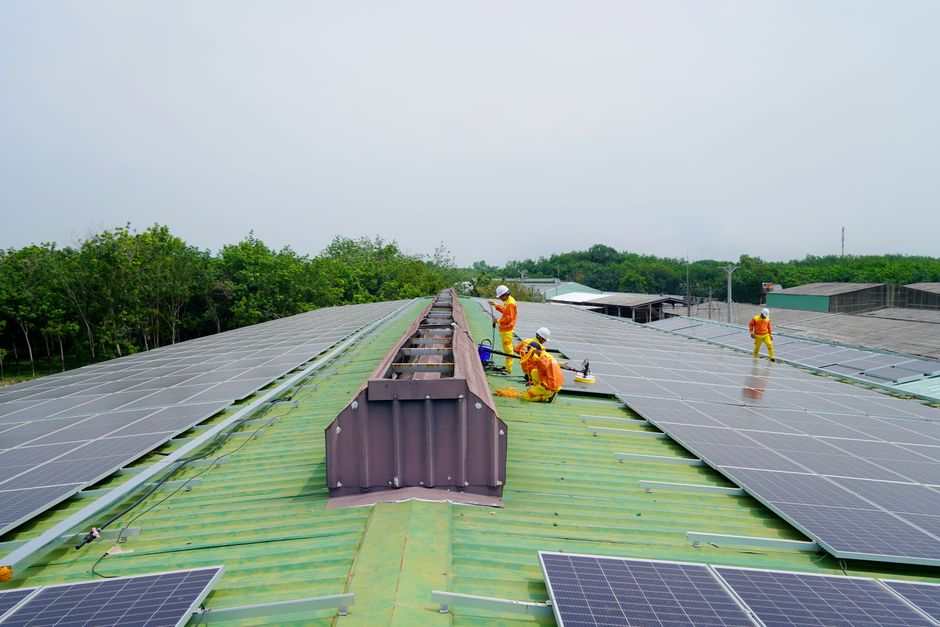
Picture a three-man rooftop cleaning crew operating out of Tuas, running a modest Google Ads account alongside a few O&M subcontracts. Every month, someone pulls up the campaign report and sees the same thing: the keyword “solar panel cleaning Singapore” has the worst cost-per-lead in the account. No form fills to show for it. By the usual logic, it’s the keyword to cut first when the budget tightens.
What almost got missed is that this particular keyword was pulling clicks from facility managers searching late in the evening, after reviewing a monthly generation report, and most of them went straight to the WhatsApp button rather than the contact form. Nobody had tagged those links, so the system logged zero conversions against a keyword that was, in reality, feeding a steady run of quote requests and contract renewals.
The fix wasn’t a new campaign or a bigger budget. It was going back through the WhatsApp Business chat log, matching timestamps against click data, and tagging every chat link with a UTM parameter tied to its source keyword and ad group. Once that keyword started showing conversions in the account, it stopped looking like the worst performer and started looking like one of the better ones, which changed how budget got allocated the following month. Nothing about the service changed. The only thing that changed was whether the account could see what was actually happening.
This is the pattern worth watching for in your own account: any keyword with real impressions and clicks but suspiciously low recorded conversions deserves a manual check against your WhatsApp log before you touch the budget slider. More often than not, the keyword isn’t failing. The tracking is.
What panel-cleaning crew owners say once WhatsApp shows up in the numbers
“We used to judge the whole account by the contact form. Turns out half our real quotes were coming through photos someone sent on WhatsApp after seeing the ad. Once we started tagging those chats, the keywords we were about to cut were actually the ones feeding our best contracts.” - Owner, three-person solar panel cleaning crew
FAQ
Do I need a Google Business Profile for a solar panel cleaning business in Singapore? Yes, even if most of your work is commercial B2B. Facility managers and property agents often check reviews and photos before messaging, and a profile with recent, genuine reviews gives Google Ads a stronger local signal to work with, especially for any search happening near an industrial estate.
What should a small operator realistically budget for Google Ads here? It depends heavily on how tightly the account is segmented. A single broad campaign chasing residential curiosity will burn through spend fast with little to show for it. A properly split account, targeting commercial and O&M buyers specifically, tends to need less raw spend to produce the same number of real quotes, because less of it leaks to people who were never going to buy.
Is SEO or Google Ads the better first move for solar panel cleaning leads in Singapore? They solve different timing problems. Google Ads gets you in front of a facility manager the week their generation report dips. Organic search builds the trust that gets your business shortlisted when a buyer is comparing two or three quotes. Most operators need both eventually, but Google Ads is usually faster to show whether the offer and the landing page are working at all.
How do I actually track WhatsApp enquiries inside Google Ads? Replace any generic WhatsApp link with a unique wa.me link carrying UTM parameters for the campaign and keyword, then set up a conversion action in Google Ads tied to clicks on that link, either through a GA4 event or an offline conversion import once the chat results in a booked job. Without this, every WhatsApp-sourced job is invisible to your reporting.
What negative keywords should I add first? Start with anything signalling a DIY search (“how to clean solar panels myself”), installation intent (“solar panel cost,” “government grant,” specific brand names), and general research terms with no buying signal. These three categories usually account for a large share of wasted clicks in a new account.
Putting it to work
This week, pull your Google Ads search terms report for the last 60 days and cross-reference it against your WhatsApp Business chat log. Look specifically at any keyword showing clicks but few or no recorded conversions, and check whether those clicks line up with chats that turned into quotes or booked jobs. It usually takes under an hour and tells you more about which keywords are actually working than a month of dashboard-watching.
If untangling that gap between what Google Ads reports and what your crew actually books feels like more than you want to carry alongside running the business, HeyLead builds and manages exactly this kind of account, segmented campaigns, WhatsApp conversion tracking, and landing pages built for how Singapore buyers actually enquire, as an ongoing program rather than a one-off fix. Chat with us on WhatsApp.
Free marketing audit, or reach Martin directly:
Get a free audit Connect on WhatsApp · [email protected]