

The costliest click in a Singapore real estate agent’s Google Ads account isn’t the one nobody answers. It’s the one somebody answers six hours late. A seller searches “HDB resale valuation” at 9pm, taps your ad, fills in a form or pings your WhatsApp, and then waits. By the time someone on your team replies the next morning, that seller has already messaged two other agents and picked the one who got back first.
That’s the real cost of a leaky Google Ads account in this market, and it has nothing to do with your cost per click. It’s a listing you never got the chance to pitch for, a viewing slot that went to a competitor, a commission that walked out the door before your phone even buzzed. More spend doesn’t fix this. A prettier ad doesn’t fix it either. The leak sits somewhere between the click and the conversation, and most agencies never go looking for it because they’re busy optimizing the part of the account that’s easiest to see: keywords and bids.
Here’s the insight most Singapore agents miss: your Google Ads account isn’t one machine, it’s a chain of five or six handoffs, and the whole thing is only as strong as the weakest link. A keyword list tells you nothing about where that link breaks. A scored audit does. Walk through the checklist below item by item, be honest about what’s actually happening (not what you set up eighteen months ago and forgot about), and you’ll know within an hour exactly where your listings are leaking.
Where the leak actually sits: the gap between a click and a WhatsApp reply
Forget the idea that Singapore property seekers browse your site, compare agents, and fill in a contact form like it’s 2016. They don’t. A seller googling “sell HDB flat agent” or a buyer searching “condo for sale Tampines” is already holding their phone, and the moment they decide to act, they want a chat window, not a form that emails someone who checks their inbox twice a day. WhatsApp is the enquiry channel here, not a nice-to-have add-on to it.
That changes what “conversion” should mean in your account. If your Google Ads conversions are still counted as form submissions or phone calls, you’re measuring the wrong moment. The real conversion event in a Singapore real estate funnel is the WhatsApp chat opening, and if that event isn’t tagged and tracked back to the keyword and ad that triggered it, you’re flying an account on guesswork dressed up as data.
This is also where most generic PPC advice falls apart for this niche. A software company can afford a slower lead cycle and a form that routes through a CRM queue. A seller deciding which agent to list their flat with is often comparing three or four agents inside the same hour, often over WhatsApp, often before anyone from your office has even seen the enquiry land. Every step between the click and that first reply is a place a listing can slip away, and that’s exactly what the checklist below is built to find.
Audit scorecard
-
1Campaigns split seller intent from buyer intent
"Sell my HDB flat" and "condo for sale district 15" are two completely different jobs with different urgency, different budgets, and different ad copy. Pull your campaign list. If valuation-style searches and listing-browse searches sit inside the same ad group bidding against the same keywords, your messaging is trying to serve two buyers at once and satisfying neither.
-
2Negative keywords block career and course searches
Singapore has a steady stream of searches like "how to become a property agent", "CEA exam fees", and "real estate course Singapore" that look vaguely relevant to broad match but have nothing to do with buying or selling. Check your search terms report for the last 90 days. If you see job-seeker or training traffic you haven't excluded, you've been paying to educate future competitors.
-
3Your CEA registration number is visible in the ad
Singapore's Council for Estate Agencies expects agents and agencies to carry their registration details on marketing materials, and a listing on a sitelink or a call extension without it looks unpolished next to a competitor who does it properly. Check your ad extensions and landing page footer. A missing registration number costs trust before it costs a click.
-
4Click-to-WhatsApp is the primary conversion action, not a form
Open the ad on your own phone and tap through as a stranger would. If the fastest route to talking to someone is a generic contact form rather than a WhatsApp button, you're forcing the slower option on the exact audience that wants the fastest one. Good accounts make WhatsApp the default call to action on mobile, with the form as a fallback, not the other way round.
-
5Every WhatsApp enquiry carries the campaign that sent it
Click-to-chat links can carry a pre-filled message or a UTM-tagged redirect that tells you which ad and keyword started the conversation. Ask your team: can you tell, from a WhatsApp thread, whether it came from a "condo for sale" search or a brand search for your agency name? If nobody can answer that in under a minute, you're paying for clicks you can't actually attribute to a listing won or lost.
-
6High-value searches land on a specific page, not the homepage
A seller who typed "sell HDB flat valuation" and lands on your agency's generic homepage has to hunt for anything relevant to what they just searched. Check three of your top keywords and see where the ad actually points. If more than one lands on the same general page, you're asking someone with a specific, urgent question to do your navigation for you.
-
7The landing page loads fast enough for someone in a lift lobby
A big share of your property searches happen on a phone with patchy signal, in a lift, on an MRT platform. Load your top landing page on mobile data, not office wifi. If it feels sluggish to you on a good connection, it's unusable to someone deciding between three agents in the time it takes a lift to reach the ground floor.
-
8Response time is measured, not assumed
Pull the timestamps on your last twenty WhatsApp enquiries against the time someone actually replied. Most agencies believe they respond "quickly" until they see the gaps in writing. A seller comparing agents rarely waits past the first reply; if your average sits in hours rather than minutes during business hours, that's the leak, not your targeting.
-
9Ad copy and landing copy say the same thing
If the ad promises "free HDB valuation in 24 hours" and the page it lands on talks generally about "your trusted property partner", the visitor feels the mismatch even if they can't name it. Read your top three ads and the pages they point to, back to back. The promise made in the headline should be the first thing the page confirms.
-
10Remarketing accounts for the HDB five-year MOP clock
A visitor who checked your valuation page but didn't enquire might simply be months out from meeting their Minimum Occupation Period. A single generic remarketing list that treats every site visitor the same wastes impressions on people who aren't eligible to sell yet, and misses re-engaging the ones who are now eligible. Segment remarketing by what the visitor actually looked at.
-
11Commission and GST are stated consistently
Since GST moved to 9%, commission conversations have gotten more sensitive for sellers watching their net proceeds closely. Check that your ad copy, landing page, and the figures your team quotes over WhatsApp all describe commission the same way, inclusive or exclusive of GST, so a seller isn't surprised later in the conversation.
-
12Testimonials and claims on the landing page can be stood behind
A line like "sold 95% faster than average" without a source, or a testimonial you can't verify came from a real transaction, is a liability the moment a prospective seller or a regulator asks about it. Review the claims on your page and keep only the ones you could explain and support if someone pushed back.
-
13Spend reconciles against listings won, not just leads counted
A lead count tells you how many conversations started. It tells you nothing about how many became an actual listing agreement or a closed sale. Pull last quarter's ad spend against listings signed that you can trace back to a paid enquiry. If nobody in your office can produce that number quickly, your reporting is measuring activity, not outcome.
If you want a soft comparison on the landing page question specifically, run your top page through a tool like HeyLead’s Core Web Vitals checker before you touch the campaign structure at all. A slow page undoes every other fix on this list before a visitor even reads your headline.
Get a free marketing audit. We review your search, ads, and landing pages and send back what to fix first.
Get a free audit
Scoring the leaks and building your 30-day fix list
Score each item above as a pass, a weak, or a fail. Pass means you checked it this week and it held up. Weak means it mostly works but you found a gap, a stale negative keyword list, a landing page that loads fine on wifi but drags on mobile data. Fail means the thing doesn’t exist at all, no attribution on WhatsApp, no dedicated pages, no response-time tracking.
Once you’ve scored all thirteen, resist the urge to fix whatever feels most embarrassing first. There’s an order that actually protects your budget: fix tracking before you touch scale, fix intent matching before you add budget, and fix speed before you commission new creative. An agency that pours more spend into an account with broken WhatsApp attribution is just buying more enquiries it can’t measure. An agency that writes punchier ad copy for a landing page that takes nine seconds to load on a phone is polishing a door nobody can open.
30-day fix list, in order
- 1Tag every WhatsApp click-to-chat link with a UTM or pre-filled message so you can trace enquiries back to the campaign and keyword that sent them. This is the single fix that makes every other decision in the account evidence-based instead of a guess.
- 2Rebuild the negative keyword list from the last 90 days of search terms, pulling out career, course, and job-seeker traffic, plus any suburb or property type your agency genuinely doesn't service.
- 3Split any campaign mixing seller-intent and buyer-intent searches into two, each with its own ad copy and its own landing page.
- 4Build or fix the dedicated landing pages for your top three keyword themes (HDB valuation, condo district search, agent brand name), and check mobile load speed on real mobile data, not office wifi.
- 5Set and publish an internal response-time standard for WhatsApp enquiries during business hours, and check it weekly against actual timestamps until it's holding on its own.
- 6Rebuild remarketing lists around what a visitor actually viewed, not one blanket audience, so MOP-eligible sellers get a different message than someone still two years out.
- 7Add your CEA registration details and a defensible, specific claim or two to the landing page, and remove anything you couldn't explain if a seller pushed back on it.
DIY tools for this section
Where the landing page itself keeps failing, it’s usually not obvious from the analytics alone. Watching a handful of real sessions in HeyLead Insights will show you exactly where a seller stalls, whether they scroll past your valuation form without touching it, or whether they tap the WhatsApp button and then abandon the chat before typing anything. That’s the kind of leak a conversion rate alone won’t explain, and it’s usually faster to see once than to guess at for months.
If you’d rather have someone run this audit alongside you, a partner that handles search campaign strategy and build end to end can usually spot the weak items in an afternoon rather than a month of trial and error.
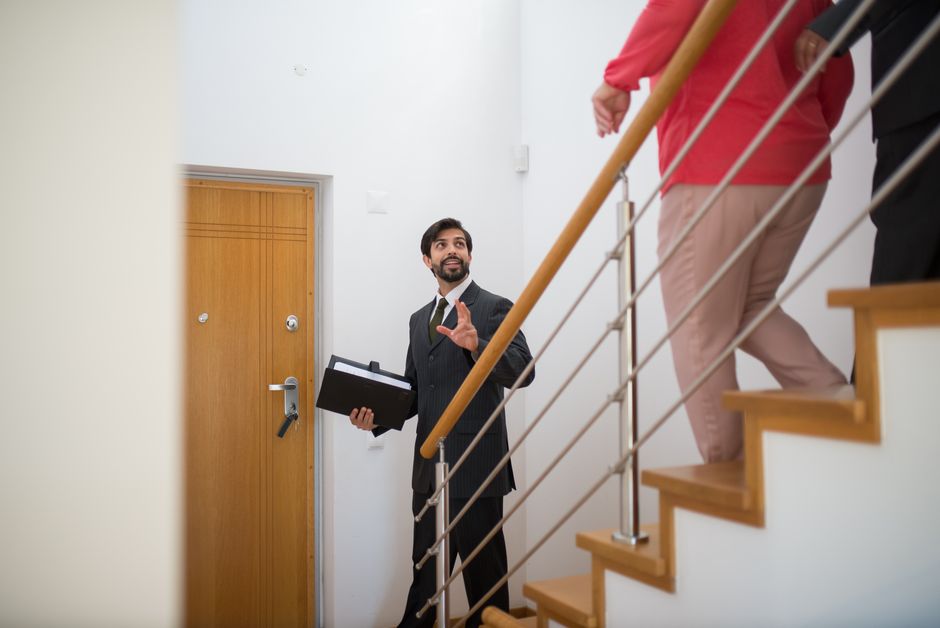
What listing agents say when the WhatsApp thread goes quiet
“We used to brag about our lead count on a Friday call with the directors. Then someone asked how many of those leads actually became a signed listing agreement, and nobody in the room could answer. That question changed what we track now, not how many chats opened, but how many turned into an appointment within the week.”
— Team lead, boutique HDB resale agency
“The thing that fixed more than any ad tweak was timing our own replies. We assumed we were fast. We weren’t, not consistently, and sellers notice the gap before they notice anything about the ad that brought them in.”
— Owner, multi-agent private property practice

FAQ
Should Google Ads for real estate agents in Singapore send traffic to WhatsApp or to a contact form? WhatsApp should be the primary path on mobile, since that’s where sellers and buyers here actually expect to continue the conversation. Keep a form as a fallback for people who prefer it, but don’t make it the default or the fastest option.
How much should a solo agent or small agency spend to see results? There’s no honest number that applies before someone’s looked at your market, your competition on the keywords you want, and how fast your team can respond. Anyone quoting a specific cost per lead before seeing your account is guessing.
Do negative keywords really matter that much for a local real estate account? Yes, more than most agents expect. Career and course searches around becoming a property agent are common enough in Singapore that an unmanaged broad match list can burn a meaningful share of a small budget on traffic that was never going to list a flat with you.
Is it worth building separate landing pages for HDB versus condo searches? Usually, yes. The seller or buyer journey, the questions they’re asking, and the urgency behind an HDB valuation versus a condo browse are different enough that one generic page serves neither well.
How do I know if my response time is actually the problem, not my targeting? Pull timestamps on your last few weeks of WhatsApp enquiries against reply times, then compare that against how many of those threads turned into an appointment. If fast replies convert noticeably better than slow ones in your own data, you’ve found your answer without touching a single keyword.
Putting it to work
Start this week by pulling your last 30 days of WhatsApp enquiries and marking, thread by thread, how long it took your team to reply and whether that enquiry turned into a booked viewing or listing appointment. It takes an hour, maybe two if your volume is decent, and it will tell you more about where your Google Ads budget is actually leaking than another round of bid adjustments ever will.
The gap between a click and a booked viewing is exactly the problem HeyLead builds its Google Ads programs around for real estate agencies in Singapore: tracked WhatsApp attribution, listing-specific landing pages, and the ongoing account work that keeps all of it tight as search behaviour shifts. If you’d rather hand that off than keep auditing it yourself, Chat with us on WhatsApp.
Free marketing audit, or reach Martin directly:
Get a free audit Connect on WhatsApp · [email protected]