
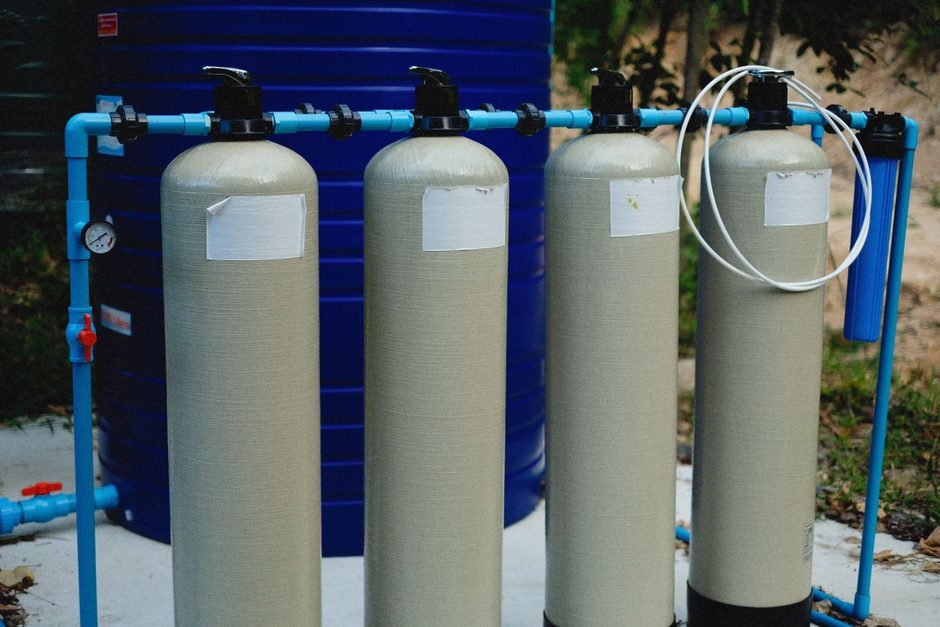
A condo management office in Tampines forwards a photo of brown water from a kitchen tap at 11:20 a.m. The owner wants a filter system quote the same day, not a brochure. A landed home in the East has a well pump that died overnight; the household needs water restored before dinner, and they will WhatsApp three numbers from Google before they fill a long form. That is the real auction your Water Treatment and Well Pumps company is buying into with PPC in Singapore: urgent household and facility problems, short decision windows, and buyers who judge you by how fast someone answers and how clearly the ad matches the job.
This piece is a benchmarks and ranges guide for owners, founders, and marketing leads running Google Ads for water treatment and well pumps in Singapore. You will get directional cost and quality bands in SGD, how to read CPL versus cost per booked job, what “good” quality looks like after the click, and a practical playbook so the numbers mean something in your diary. No invented studies. Treat every range as operational guidance you still have to validate against your margins, crew capacity, and response speed.
If you only track form volume, you will misread the market. High-intent search is expensive for a reason. The question is whether those clicks become site surveys, installs, pump callouts, and recurring cartridge or maintenance work, not whether the dashboard CPL looks tidy.
What Singapore water and pump buyers actually search before they book
Buyers rarely type “water treatment company” and then leisurely compare brands. More often they search the symptom or the asset: dirty water after NEA works nearby, low pressure on a high floor, a noisy or dead well pump on a landed plot, TDS or hardness complaints in a condo kitchen, commercial RO for a F&B unit in the Central region, or “urgent water pump repair” when a tank or booster setup fails. Property managers for HDB clusters and condo MCs often need paperwork, GST invoices, and a clear scope before they can approve spend. Homeowners on landed sites care about same-day attendance and whether you touch the well, the pump, or both.
Intent clusters that tend to book work look like this in practice:
-
Emergency or same-day pump failure, no water, burnt smell, tripped breaker on pump circuits.
-
Whole-house or under-sink filtration after a taste, smell, or sediment event, especially post-renovation dust or pipe work.
-
Commercial or F&B RO and treatment where downtime hits revenue.
-
Replacement of ageing pumps or pressure systems on landed homes in North and North-East estates as systems age out.
-
Service contracts and cartridge changes once trust is earned on the first install.
Lower-intent traffic still shows up: school projects, “how water filtration works,” DIY cartridge swaps, and price-only shoppers collecting five quotes with no timeline. Those queries burn budget if your campaigns are broad and your negatives are thin. Across SEM accounts generally, 20-30% of spend routinely leaks into irrelevant queries, weak negatives, or pages that do not match the ad. Water treatment is not immune. A click on “water filter DIY install” that lands on a commercial RO page is a quality problem before it is a bid problem.
Mobile drives most paid search clicks globally (often cited above 60%), and Singapore’s WhatsApp-first behaviour amplifies that. People screenshot a SERP, tap call, or open chat. If your ad promises “same-day pump check” and the landing page only offers a Monday-Friday office form with no phone or WhatsApp path, quality collapses even when CPC looks “acceptable.”
For a deeper channel build beyond ranges alone, HeyLead’s SEM / Google Ads work in Singapore is built around booked jobs and clean measurement, not vanity lead counts.
Where cost and quality diverge: CPL that looks fine, jobs that do not
Owners often ask for a single “good CPC” for water treatment PPC in Singapore. There is no universal number. Search CPC averages in broader 2026 benchmarks sit near the low single digits in USD terms industry-wide, but local home-services auctions for emergency and installation intent run tighter and more expensive than informational terms. What matters operationally is the stack: CPC × conversion rate to enquiry × show rate × close rate × average job value (and GST-aware pricing at 9% where you quote tax-inclusive or exclusive consistently).
Directional ranges many Singapore water treatment and well pump operators use as sanity checks (recalibrate to your own last 90 days):
-
Enquiry CPL (form, call, or WhatsApp start): often lands roughly SGD 40-180 depending on mix of emergency pump vs filtration research vs commercial RO. Emergency pump terms can spike higher on thin inventory weeks.
-
Cost per qualified site visit or survey: commonly 1.5-3× enquiry CPL once you filter tyre-kickers, out-of-area enquiries, and “just sending photos for a free design” with no access date.
-
Cost per booked paid job: the number that should sit on the marketing wall. Healthy accounts often see this at a clear fraction of average job gross margin, not at “whatever CPL Finance will tolerate this month.”
-
Speed-to-first-response: under 5-15 minutes during advertised hours for emergency pump and no-water queries; under an hour for filtration quotes on business days. Miss that window and paid quality metrics lie to you.
-
Show rate on booked surveys: if fewer than roughly two-thirds of agreed visits happen without reschedule chaos, your lead quality or confirmation process is broken, not only your ads.
Quality filters that separate diary-filling leads from noise:
-
Property type named (HDB / condo / landed / commercial) and rough location (postal code or estate).
-
Problem stated in one sentence (pump dead, brown water, low pressure, commercial RO downtime).
-
Access window or urgency (today, this week, planning only).
-
Decision-maker reachable on WhatsApp or phone, not only a generic MC email with a 10-day loop.
Dayparting without capacity is how accounts look “efficient” on CPC and terrible on cost per booked job. If your technicians are fully loaded 9 a.m.-1 p.m. in the West and you still bid aggressively then, you buy enquiries that go cold by evening. Align bid modifiers and ad schedules to when someone can answer PayNow deposits, WhatsApp photos, and dispatch.
Tracking gaps make quality ranges useless. Call-only conversions without recording which campaign drove the call, WhatsApp clicks with no offline import of “job won,” and last-click models that double-count the same closed job will push smart bidding toward cheap enquiries. Privacy and ad-blockers already drop a material share of conversion signals in many accounts; Enhanced Conversions and clean offline job status matter more here than another campaign split.
When post-click proof is thin (no pump brands you service, no before/after filtration photos, no response promise), paid traffic bounces. Session behaviour tools such as HeyLead Insights help you see where visitors stall on forms, ignore proof blocks, or abandon after slow load on mobile, so you fix the page instead of only raising bids.
Get a free marketing audit - we review your search, ads, and landing pages and send back what to fix first.
Get a free audit
A practical Google Ads playbook for cost control and job quality
Build the account around booked work, not keyword theatre. Start with intent maps, then structure, then landing match, then bidding only when signals are trustworthy.
Audit scorecard
-
Intent inventory in SGD terms List the last 50 closed jobs and reverse-map the search language customers used: pump repair, booster, well pump, sediment filter, UV, RO for F&B, whole-house. Tag each as emergency, planned install, or service contract. Bid and budget first where closed-won density is highest, not where impression share looks impressive.
-
Negatives before scale Add DIY, free, job vacancy, salary, PDF, school, “how to,” pure brand research on competitors you cannot win, and out-of-scope plumbing if you do not offer it. Review search terms weekly for the first month, then biweekly. This is the cheapest quality lever you have.
-
Campaign split by job economics Separate emergency pump / no-water from filtration systems and from commercial RO. Different LP proof, different callouts, different acceptable CPL. Mixing them hides which line is funding the other.
-
Ad to page message match If the RSA says same-day well pump diagnosis for landed homes, the page must lead with that promise, coverage areas (e.g. East, North-East), WhatsApp and call, and proof of similar jobs. Homepages that list every trade dilute Quality Score and conversion rate.
-
Call and WhatsApp as first-class conversions Track calls from ads and from the page. Log WhatsApp starts where possible. Import offline “survey booked” and “job won” with values in SGD. Smart bidding without those signals optimises for the wrong thing.
-
Capacity-aware schedules Reduce bids when nobody can answer. Raise presence when standby techs are on. A cheap lead at 10 p.m. that nobody returns until noon next day is often more expensive than a pricier click at 8 a.m. that books by 8:20.
-
Landing proof and speed Show licensed workmanship where relevant, brand of pumps and media you install, GST-ready invoicing for MCs, photo proof, and a short form plus click-to-call.
-
Quality review cadence Every week, sample 20 enquiries: booked, disqualified, no answer, price-only. Tag root cause (creative, keyword, LP, response). Reallocate budget toward clusters that produce jobs, not toward the campaign with the prettiest CTR.
DIY playbook
-
Export 90 days of Google Ads search terms and mark each as job-like, research, or waste. Pause or negative the waste before you touch bids.
-
Build or tighten one landing page per money intent (pump emergency, residential filtration, commercial RO) with Singapore proof and WhatsApp.
-
Wire call tracking and offline conversion import for survey booked and job won in SGD.
-
Set ad schedules to staffing reality across Central, East, West, North, and North-East coverage if your crew is regional.
-
Run RSA tests on urgency and property type, not vague “trusted experts” lines. Keep one controlled experiment at a time so learning does not reset constantly.
-
Once conversion volume is stable, test smarter bidding on the campaign with clean job-won signals first; keep fragile new themes on more manual control until quality is proven.
-
Report weekly to operations: cost per booked job, not only platform CPA. Agree a kill threshold when a theme cannot reach job economics after a fair sample.
Free tools - try these yourself
Emergency callout accounts with strong close rates routinely exceed generic cross-vertical benchmarks on contribution margin; filtration projects with long quote cycles can sit under ecommerce-style last-click ROAS if you only measure the platform number. Use ROAS as a conversation starter, not a contract guarantee. Nobody honest can lock a CPL or ROAS before seeing your account, pages, and unit economics, and durable results usually take months of iteration, not a weekend of bid rules.
Niche operators who want a partner fluent in this trade can skim HeyLead’s Water Treatment and Well Pumps marketing overview for how paid search sits next to landing pages and measurement.
Two Singapore account snapshots where ranges forced a decision
Snapshot A: East-region pump callouts. A small team covering Tampines through Bedok was paying roughly SGD 70-90 per form fill on broad “water pump” themes. Ops complained that half the forms were DIY pressure questions or HDB units outside their booster scope. They split emergency landed/well and booster repair into its own campaign, added negatives for DIY and “replace myself,” moved the ad schedule to tech shift hours, and required property type on the form. Enquiry CPL rose to about SGD 110, but cost per booked callout fell because show rate and close rate climbed. The mechanism was not a magic bid strategy. It was refusing cheap, wrong intent.
Snapshot B: Condo filtration quotes in the Central fringe. Another operator saw strong CTR on “water filter installation Singapore” but weak survey bookings. Heatmap-style review of the page showed mobile users expanding a long technical FAQ and never reaching WhatsApp. They shortened the hero to “under-sink and whole-house filtration for condos,” put WhatsApp and call above the fold, added three condo install photos with estate-type captions, and imported “survey booked” offline. Platform CPA looked slightly worse for two weeks while bidding relearned; diary volume for qualified surveys recovered. The failure mode was post-click friction, not keyword choice alone.
Both stories share one rule: publish internal ranges for enquiry, survey, and job, then manage the account to the middle and bottom of that funnel. If you only celebrate a lower CPL, you will scale the wrong traffic.
Patterns we hear from operators
Perspectives drawn from operator conversations; names withheld on request.
“We thought SGD 55 CPL on filtration was a win until we tagged outcomes. Almost 40% never named a property type or access window. Once we treated those as non-leads in bidding imports, spend dropped and the survey calendar actually filled.” - Founder, water treatment firm, Singapore
“Emergency pump search is spiky after storms and pipe works. The week we ignored dayparting, we bought midnight WhatsApps nobody answered until late morning. Cost per booked job looked broken; response capacity was the real leak.” - Operations-minded owner, well pump services, North-East Singapore
FAQs
What is a reasonable Google Ads budget to learn real ranges in Singapore?
Enough to collect a statistically useful sample on your top two intents in 30 days, often a few thousand SGD per month for a focused water treatment or pump account, not a token daily budget that never exits learning. If staffing can only handle a handful of surveys a week, cap spend to capacity or you will pay to anger buyers.
Should we use Performance Max for water treatment PPC?
Performance Max can take a large share of spend in mature accounts when asset groups and conversion signals are clean. For many trade accounts still fixing negatives and offline job import, start with Search on high-intent themes so you can read queries. Add PMax later with strong creative and value rules, not as a black box substitute for search term hygiene.
Call extensions or landing page forms?
Offer both. Emergency pump buyers call. Filtration and commercial RO buyers often WhatsApp photos first. Count each as a conversion only when your team logs outcome quality. Forms without phone or chat suppress the highest-intent mobile traffic in Singapore.
How do GST and quoting affect paid lead quality?
MC and commercial buyers expect clear GST treatment at 9% and proper invoices. If ads imply a cash price that finance cannot support, you will see high enquiry volume and low close rates. Align landing copy and sales scripts so paid traffic is not surprised at quote stage.
How often should we refresh RSA copy?
When CTR or conversion rate drifts against your baseline, or when ops changes coverage and response promises. Constant daily rewrites reset learning. Systematic tests beat ad-hoc rewrites every week.
Putting it to work
Execution sprint
This week
- Pull 30-90 days of performance for water treatment (Search Console, ads, CRM, or call logs - whatever you have).
- Flag the top leak: wrong intent, weak page, slow response, or dirty conversion tracking.
- Ship one fix on the highest-traffic money path (page, campaign split, or response rule).
- Run the free tools below on that same URL or account and log the findings.
Free tools for this sprint
Next 30 days
- Expand the fix to the next one or two money paths only after the first one shows cleaner bookings.
- Align creative, keywords, or content with the same offer the page now states.
- Review booked outcomes weekly; cut anything that still only produces unqualified volume.
This week
-
Pull 90 days of spend, enquiries, surveys, and jobs; write your real SGD ranges for CPL, cost per survey, and cost per booked job.
-
Mine search terms and add a first negative list aimed at DIY, jobs, and pure research queries.
-
Confirm call and WhatsApp paths work on mobile and that someone owns sub-15-minute response on emergency themes during open hours.
-
Run the Core Web Vitals and snippet checks on your top two landing URLs; fix the worst mobile friction first.
-
Sample 20 recent paid leads with ops and tag true quality so bidding imports can follow reality.
Next 30 days
-
Split campaigns by emergency pump, residential filtration, and commercial treatment if they still share one budget.
-
Launch or rebuild dedicated landing pages with Singapore proof and offline conversion import for job won.
-
Align ad schedules to crew capacity by region and review cost per booked job every week with the same definition.
-
Only then test broader automation on the campaign with the cleanest signals.
Use the free UTM, SERP, and Core Web Vitals tools above while you tighten the account yourself. If the hard part is keeping Google Ads cost and quality ranges honest for Water Treatment and Well Pumps in Singapore (search hygiene, landing match, response capacity, and job-level feedback into bidding), a specialist team like HeyLead can run that SEM loop with you so marketing spend tracks the diary, not only the platform CPA. Start a conversation on Chat with us on WhatsApp.
Free marketing audit, or reach Martin directly:
Get a free audit Chat with us on WhatsApp · [email protected]